Start with access constraints
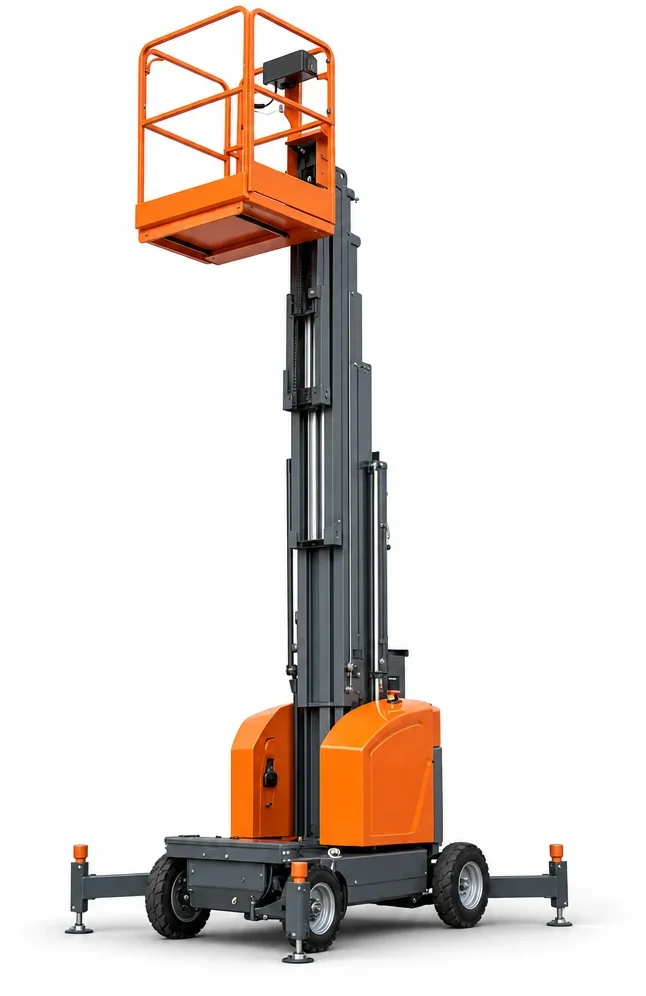
Measure the narrowest doorway and aisle, plus the turning area at the work point. If obstacles block a scissor or boom from lining up, a mast lift’s compact chassis and zero‑turn capability can reach straight up inside congested interiors.
Local conditions to factor
Winter shifts many tasks indoors across the region, increasing demand for low‑emission, slab‑rated units. Multi‑level facilities and mezzanines may impose strict floor load limits; mast lifts often meet those limits better than larger platforms. For outdoor work on Akron’s variable grades, a rough‑terrain scissor or boom is usually more stable; see /rough-terrain-scissor-lift-rental/ or /articulating-boom-lift-rental/.
Specs that narrow the mast size
- Platform height and outreach: Most work is vertical; some models offer small outreach for final positioning.
- Machine width and weight: Verify against door clearances and slab capacity near sensitive equipment.
- Platform capacity and components: Account for tools, fixtures, and small parts bins commonly used during service tasks.
When another lift fits better
- Long horizontal moves or work that must reach over obstructions point to /articulating-boom-lift-rental/.
- Wider work areas with two‑person platforms may align with /electric-scissor-lift-rental/.
Actual conditions, the unit’s instructions, and site procedures govern interior elevation work.
Akron planning notes
Industrial sites and local distribution buildings can have tight staging around docks and machine cells. Map delivery paths, elevators, and ramp transitions to confirm the lift can travel from receiving to the work area without exceeding slope or clearance limits.