Ground and grade considerations
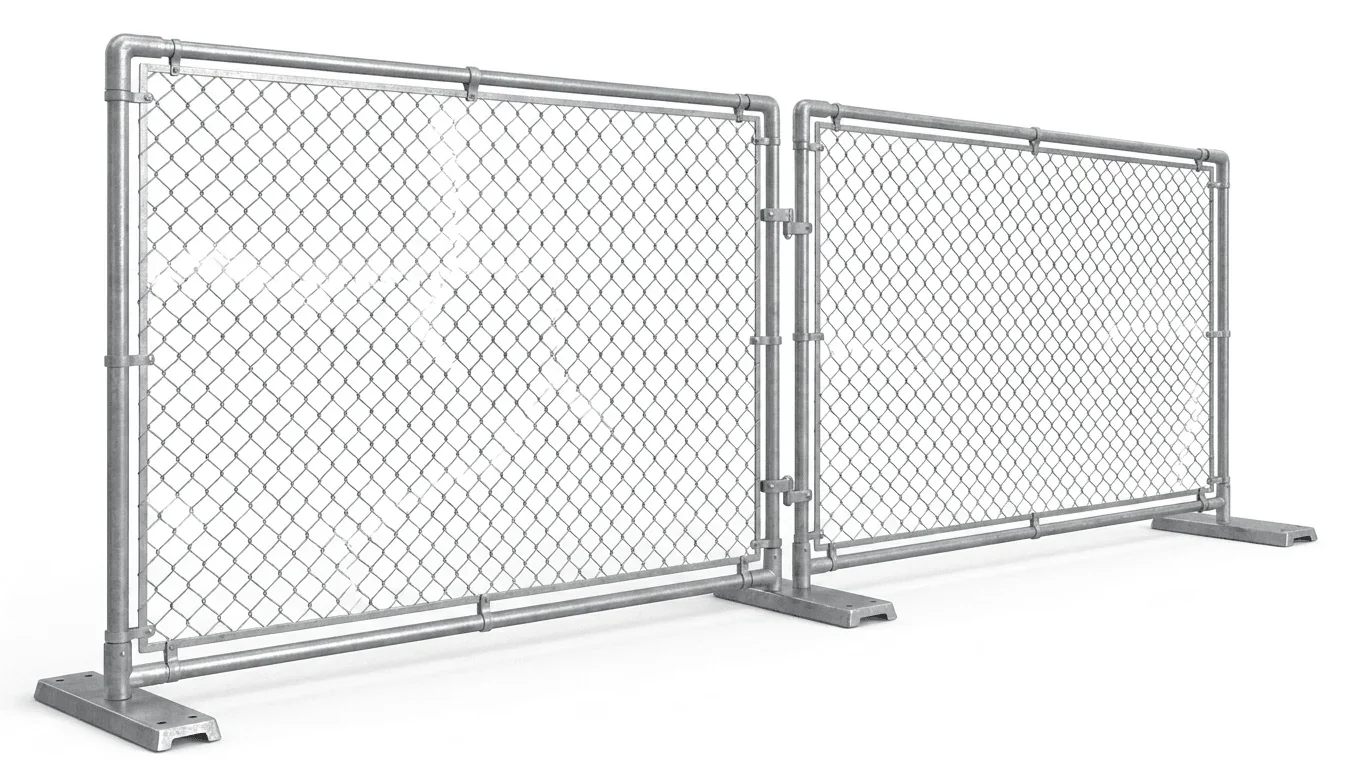
- On uneven or hilly ground, panel lines may need additional stabilization to maintain straight runs along changing elevations.
- Winter freeze–thaw cycles can lift or tilt bases. Identify a layout that keeps openings usable even after weather shifts.
Perimeter around industrial and logistics activity
- In busy yards, set barricade lines with enough offset from forklift paths and telehandler turns to avoid pinch points.
- Redevelopment sites may need alternating fence lines to navigate curbs, utilities, and temporary access roads.
Access points and sightlines
- Plan gate widths for expected traffic, including scissor lifts and boom lifts moving materials. Tight turns near gates slow work.
- On sloped approaches, maintain sightlines into the site so drivers and walkers can see around stacked materials.
Coordination with aerial and material handling
Temporary barriers frequently define safe zones near elevated work: - Indoor slab access: /electric-scissor-lift-rental/ - Exterior rough ground: /rough-terrain-scissor-lift-rental/ - Complex reach over obstacles: /boom-lift-rental/ and /articulating-boom-lift-rental/ - Material staging: /forklift-rental/ and /telehandler-rental/
Actual conditions, the selected unit’s instructions, and site procedures govern exterior and elevated work inside or near barricaded areas.
Weather exposure and durability
- The regional climate brings snow, wind, and thaw cycles. Weighting and footing choices affect panel stability over the season.
- In crowded redevelopment blocks, reflective or high-visibility options improve recognition at dusk and during winter overcast.